APQP, Explained the Way a Trainer Would.
Advanced Product Quality Planning is how good manufacturers launch products that work the first time. No jargon walls here — this guide walks you through the five phases, the gates, and what the 2024 3rd Edition changed, with the tips we give teams in real APQP workshops.
What Is APQP, Really?
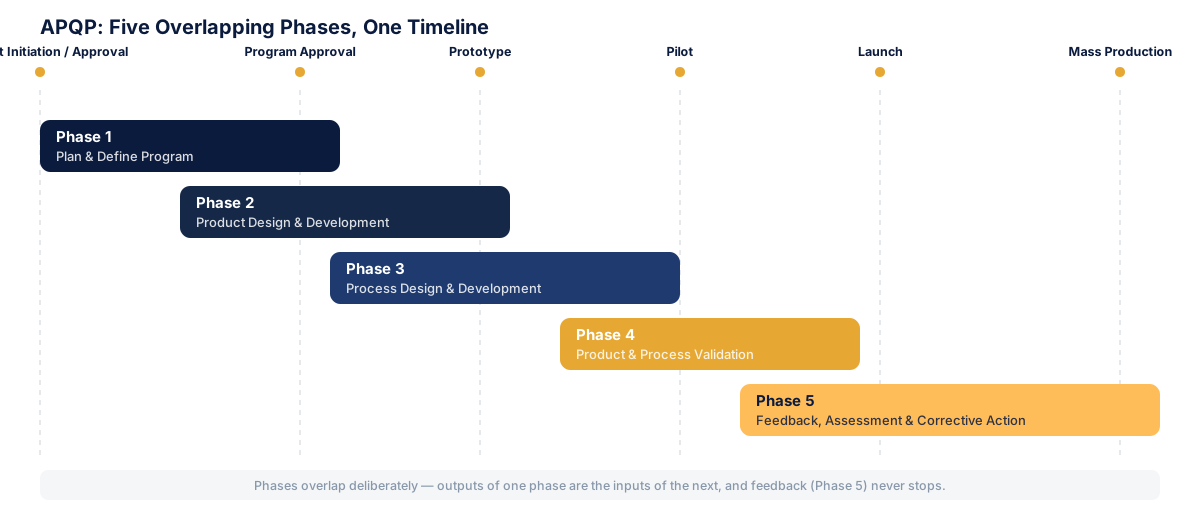
APQP (Advanced Product Quality Planning) is a structured method for planning quality into a new product before production starts — five overlapping phases that take a cross-functional team from "here's what the customer wants" to "here's proof our process makes good parts at rate." Born in the US automotive industry (Ford, GM and Chrysler published the first AIAG manual in 1994), it is now one of the five core tools every IATF 16949 supplier is expected to practise.
A Cycle, Not a Checklist
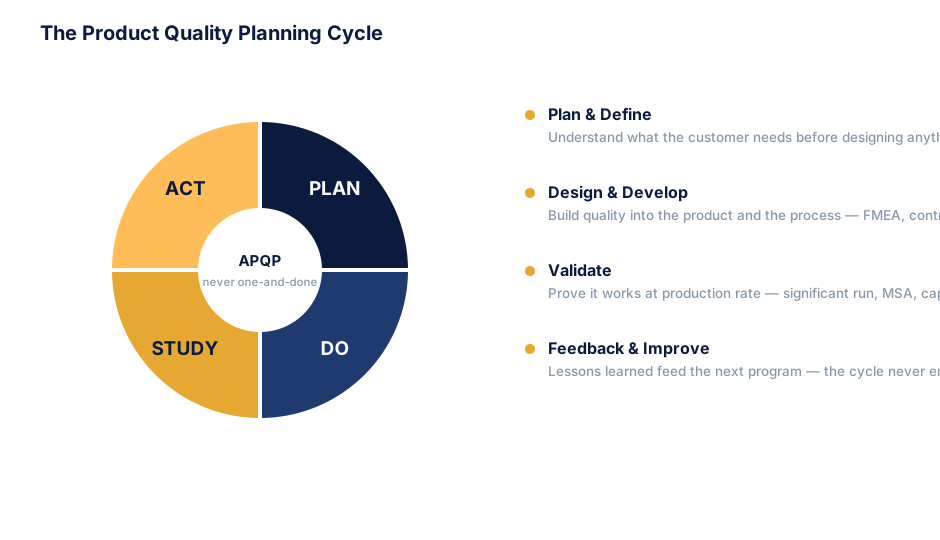
The APQP manual draws the whole method as a Plan-Do-Study-Act cycle for a reason. Planning quality is never "done" — the data that comes back from production (Phase 5) is the smartest input your next program's Phase 1 will ever get.
That's also why the phases overlap on the timing chart. Process design starts while product design is still moving; validation planning starts while the process is still being built. Teams that run the phases strictly one-after-another finish late — and skip the feedback loop entirely.
Getting Started: The Part Most Teams Skip
The manual's "Section 0" exists because most APQP failures are set up before the first phase begins. Five things to get right on day one:
The Five Phases — Inputs, Outputs, and What Actually Matters
Each phase below shows the key inputs and outputs from the AIAG manual, plus the tip we find ourselves repeating in every workshop. For the full story-driven walkthrough, read the phases guide.
Plan and Define Program
This is where programs are won or lost — before a single drawing exists. The job: translate what the customer actually wants (the "voice of the customer") into concrete design goals, reliability targets and first assumptions, and be honest about whether you have the capacity and capability to deliver. The 3rd Edition strengthened this phase heavily: capacity planning, change management, program metrics and a risk assessment & mitigation plan are now explicit expectations.
Key inputs / activities
- Voice of the customer — market research, warranty history, team experience
- Business plan & marketing strategy; benchmark data
- Product/process assumptions; customer inputs
- Capacity planning & risk assessment (new emphasis in 3rd Ed.)
Key outputs
- Design goals; reliability & quality goals
- Preliminary bill of material & preliminary process flow
- Preliminary list of special characteristics
- Product assurance plan; leadership support confirmed
If the customer never told you how the part fails in the field, ask. The cheapest FMEA input you will ever get is the warranty data your customer already has.
Product Design and Development
Now the design takes shape — and so does the discipline around it. DFMEA asks "how could this design fail?" while the design is still cheap to change. Design reviews, verification plans, and the prototype build control plan keep the engineering honest. This phase ends with a hard question: the team feasibility commitment — can we actually manufacture this, at volume, at target cost?
Key inputs / activities
- DFMEA (per AIAG-VDA methodology)
- Design for manufacturability, assembly & service
- Design verification plan; design reviews
- Engineering drawings, specifications, material specs
Key outputs
- Prototype build control plan
- New equipment, tooling & facilities requirements
- Special product & process characteristics list
- Gages/test equipment requirements; team feasibility commitment
Never sign the feasibility commitment in a meeting where nobody from manufacturing has seen the drawings. That signature is a promise your shop floor has to keep.
Process Design and Development
The mirror image of Phase 2: now we design the factory's side of the story. The process flow chart, floor plan, and PFMEA define how the part will actually be made and where it can go wrong. The pre-launch control plan and process instructions translate all that thinking into what an operator sees at the station. The MSA plan and preliminary capability study plan set up the proof for Phase 4.
Key inputs / activities
- Packaging standards & specifications
- Product/process quality system review
- Process flow chart & floor plan layout
- PFMEA — fed by the DFMEA and special characteristics
Key outputs
- Pre-launch control plan
- Process instructions (operator-level)
- Measurement systems analysis (MSA) plan
- Preliminary process capability study plan
Walk the process flow chart on the actual floor, not in the conference room. Every arrow on that chart is a place material can wait, get mixed, or get damaged — the PFMEA should know about all of them.
Product and Process Validation
Proof time. A significant production run — real tools, real operators, real rate — generates the evidence: MSA studies confirm you can trust your measurements, capability studies confirm the process holds tolerance, production validation testing confirms the product performs. It all rolls into PPAP for customer approval, and the production control plan (now with Safe Launch provisions per the new Control Plan manual) takes over.
Key inputs / activities
- Significant production run at production rate
- Measurement systems analysis (Gage R&R)
- Preliminary process capability study
- Production validation testing; packaging evaluation
Key outputs
- Production part approval (PPAP) submission
- Production control plan — with Safe Launch for early builds
- Quality planning sign-off
- Leadership support & launch readiness decision
A significant run at 30% of rate proves nothing about rate. If the customer allows a reduced run, at least stress the bottleneck station at full cycle time — that is where launch weeks get ugly.
Feedback, Assessment and Corrective Action
The phase everyone forgets — and the one that makes the next launch cheaper. Production data comes back: variation, customer satisfaction, delivery performance. Lessons learned get written down while they still hurt. In mature organizations, Phase 5 of this program is quietly Phase 1 of the next one.
Key inputs / activities
- Production variation data (SPC)
- Customer satisfaction & field performance
- Delivery & service performance
- Problems, 8Ds and their root causes
Key outputs
- Reduced variation — actions, not just charts
- Improved customer satisfaction & delivery
- Lessons learned / best practices database
- Inputs for the next program’s Phase 1
Hold the lessons-learned review within 90 days of launch, while the scars are fresh. Twelve months later it becomes a celebration meeting, and celebrations don't produce checklists.
Gated Management: Decisions With Teeth
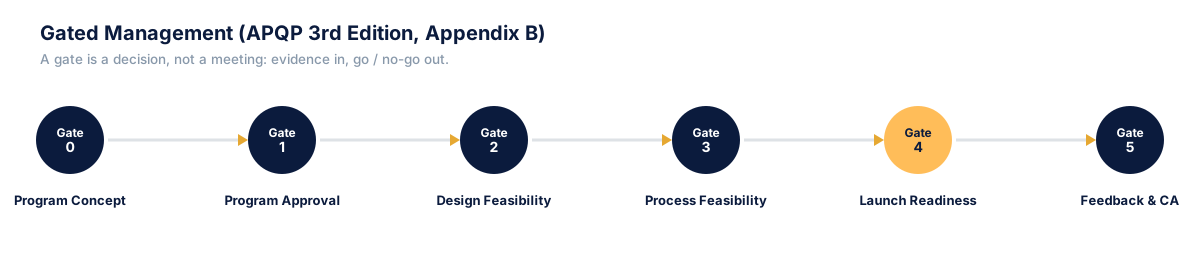
The 3rd Edition added a full appendix on gated management — six gates where leadership reviews evidence and makes a real go / no-go decision. A gate that always says "go" is not a gate; it's a ritual. Each gate has defined section instructions: what evidence must exist, who reviews it, and what happens when it's missing.
What the 3rd Edition Changed
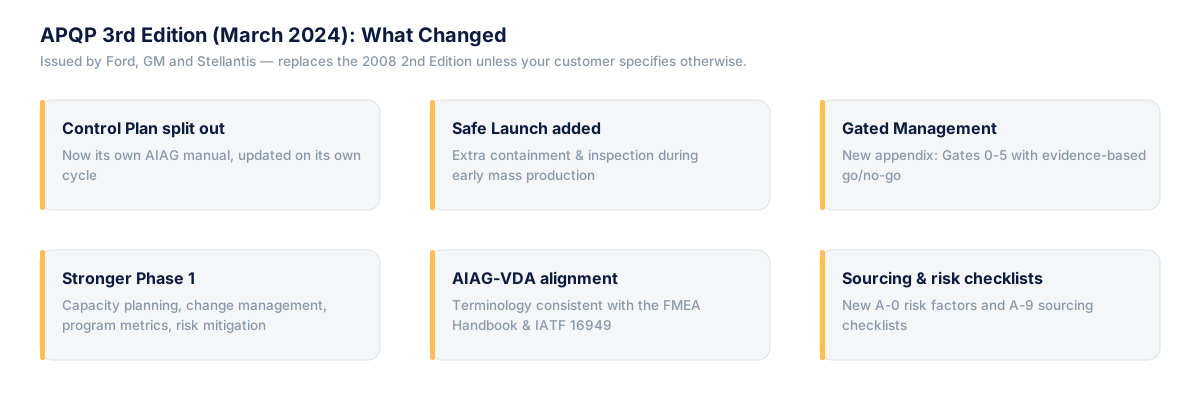
Effective 1 March 2024, the APQP 3rd Edition and the new standalone Control Plan Reference Manual replaced the 2008 2nd Edition (unless your customer specifies otherwise). The changes are practical, not cosmetic — full analysis in our 3rd Edition breakdown.
APQP Is the Conductor, Not the Orchestra
APQP doesn't replace the other core tools — it sequences them. The FMEA feeds the control plan; the control plan drives the inspection standards; MSA proves the gauges; SPC proves the process; and PPAP packages the evidence for your customer.
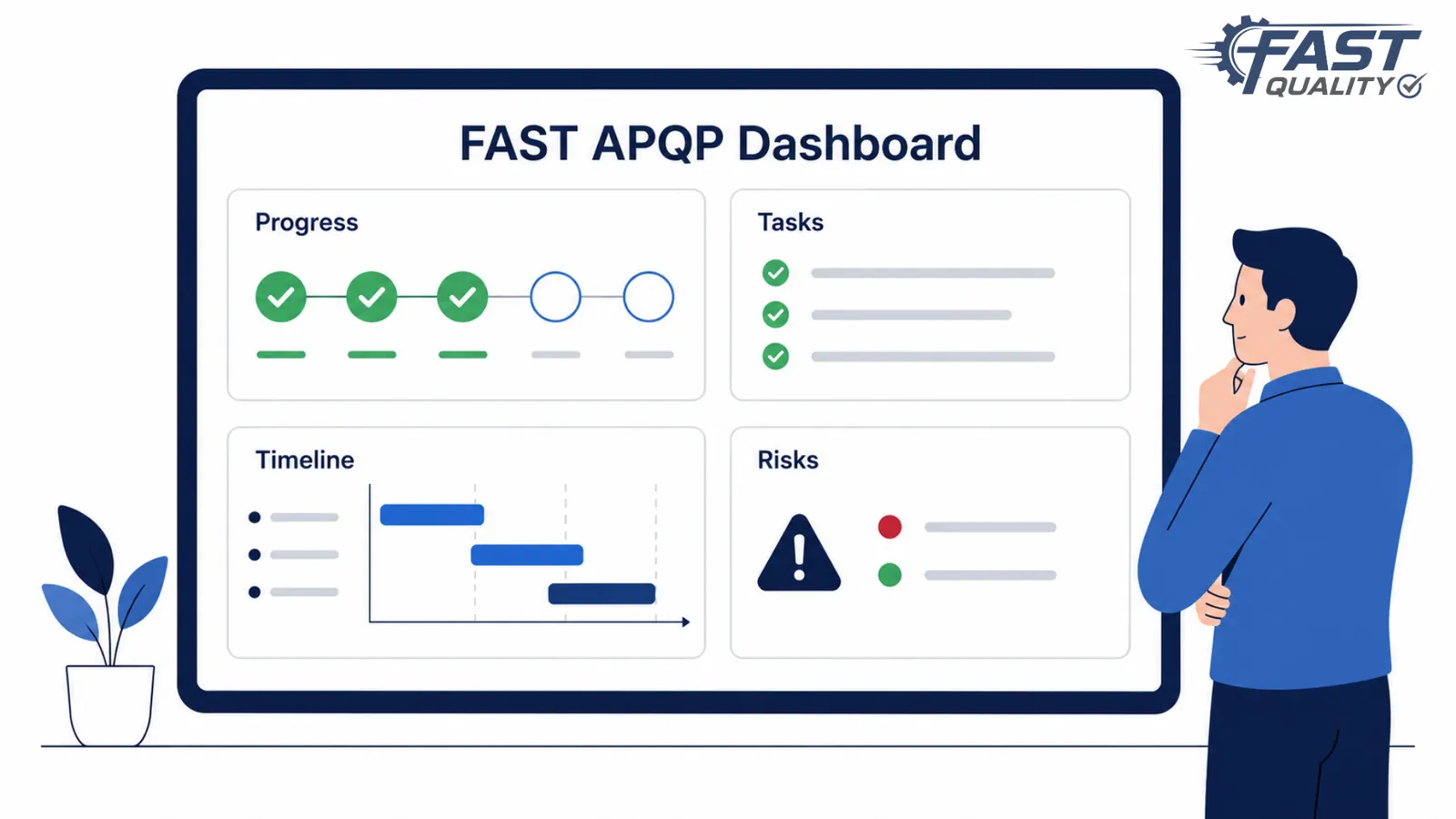
That's also the honest argument for running APQP in software instead of spreadsheets: when the FMEA, control plan, checksheets and capability data live in one connected system, a change in one place flows to all the others — which is exactly what auditors check and exactly what Excel can't do. See how FAST APQP software handles the phase deliverables, milestones and gate evidence.
APQP: Frequently Asked Questions
Run Your Next Launch on APQP That Actually Works
Get the complete phase-by-phase APQP checklist, or see the five phases running as connected software — milestones, deliverables, FMEA, control plans and gate evidence in one place.