APQP fails in practice for predictable reasons: it's treated as paperwork after decisions are made, timing plans are fiction, feasibility is signed without evidence, special characteristics inflate until meaningless, gates always say "go", suppliers are left out of the cascade, and the documents live in disconnected spreadsheets. Every one of these has a practical fix.
Let me say the quiet part out loud: most APQP I've audited was written backwards — the launch happened however it happened, and then someone produced the APQP file for the customer audit. The method isn't broken. The way plants practise it is. Here are the seven failure modes I see most, and what actually fixes them — not what the training slides say.
1. APQP as Documentation Theatre
The symptom: the DFMEA is dated two weeks before PPAP. The control plan was written by one quality engineer, alone, at night. Everything exists; nothing was used.
Why it happens: the customer audits documents, so documents get produced. Planning takes meetings nobody has time for.
The fix: make one rule non-negotiable — no deliverable is created after the decision it was supposed to inform. The FMEA before design freeze. The capacity check before quoting. If you can only enforce one thing from this article, enforce this. And stop measuring APQP by document completion — measure it by the number of changes it caused (design changes from DFMEA, process changes from PFMEA). A DFMEA that changed nothing was either done too late or done wrong.
2. The Timing Plan Is Fiction
The symptom: the timing chart shows tooling trials in week 30. Everyone in the room knows the tool arrives in week 34. The chart stays green.
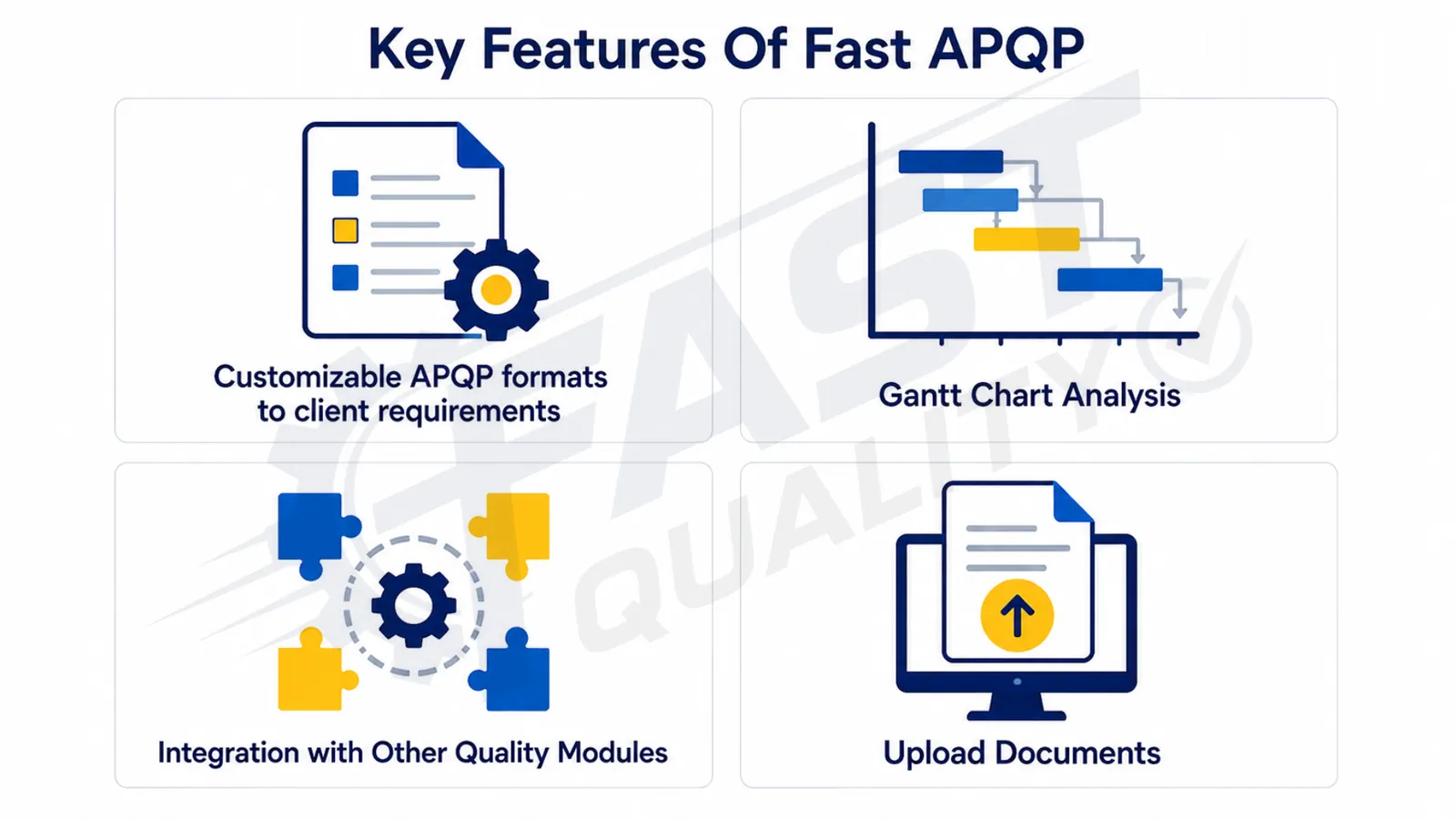
The fix: one timing plan, visible to everyone, updated weekly, with dependencies — not a Gantt image pasted into slides. When a date moves, the downstream dates move visibly, and the gate review discusses the real dates. A plan that can't embarrass anyone can't protect anyone either. This is where running APQP in software beats spreadsheets bluntly: milestones with owners, automatic escalations, and a single version of the truth.
3. Feasibility Signed Blind
The symptom: the team feasibility commitment is signed by people who never saw the drawings — or worse, signed by sales.
I once watched a plant manager refuse to sign feasibility for a part with a 0.02 mm true-position callout their machines couldn't hold. Sales escalated; the GM signed instead. That part generated 14 customer complaints in year one and a weekly sorting bill nobody put in the quote. The refusal was the system working. The override was the failure.
The fix: feasibility review is a working session with the drawings, the machine capability history and the gauge list on the table. Every "yes" gets evidence attached; every "yes, if" becomes a tracked action. And the people who sign must be the people who will live with the process.
4. Special Characteristics Inflation
The symptom: 40% of the drawing is marked critical. Operators can't tell what genuinely matters, so in practice nothing does. SPC resources are spread so thin the charts are wallpaper.
The fix: special characteristics must earn their status through the FMEA — severity and risk, not fear. Fewer, better-controlled characteristics beat a sea of symbols. If everything is special, nothing is: your SPC effort should concentrate where the AIAG-VDA Action Priority actually points.
5. Gates Without Teeth
The symptom: every gate review in the program's history has concluded "go". Deliverables marked 80% complete for three consecutive months. (80% is spreadsheet language for "not done and nobody wants to say so.")
The fix: the 3rd Edition's gated management appendix exists precisely for this. A gate needs three things: evidence requirements defined in advance, a reviewer empowered to say no, and a real consequence for a no — a recovery plan with dates, not a shrug. One genuinely enforced no-go early in a program does more for APQP culture than a year of training.
6. The Supplier Cascade Gap
The symptom: your APQP is immaculate; your casting supplier first heard the launch date in an expedite call. Tier-1s demand APQP upward and forget to cascade it downward.
The fix: your suppliers' key milestones belong on your timing plan — their tooling kickoff, their sample submissions, their PPAP. The 3rd Edition's new sourcing checklist (A-9) makes this explicit. Run supplier APQP status as part of your own gate reviews; a supplier who goes quiet for six weeks is a risk signal, not a relief.
7. Spreadsheet Archaeology
The symptom: the PFMEA (v7, in email), the control plan (v5, on the server) and the checksheet at the station (v3, printed) disagree. Nobody knows which is current. The auditor finds out.
The fix: the core APQP documents are relational — FMEA drives control plan drives inspection. Disconnected files guarantee drift. Whether you use our software or anyone else's, the requirement is the same: one linked chain from failure mode to control to checksheet, so a change in one place updates the others and the station always shows the current revision.
Get the Complete APQP Checklist (3rd Edition)
Every phase, every deliverable, every gate — a phase-by-phase workbook with owner and status columns, aligned to the 2024 3rd Edition (including the new Phase-1 items and Safe Launch). Delivered free on WhatsApp.
Send Me the Checklist Or Request It by EmailThe Pattern Behind All Seven
Look back at the list: every failure mode is a truth-telling problem, not a technique problem. Fictional dates, blind signatures, inflated symbols, gates that can't say no. APQP works exactly as well as your organization's appetite for hearing bad news early. The method just gives that appetite a structure — five phases (walkthrough here), six gates, and a paper trail that makes honesty cheaper than theatre.

Dhanashree Kathare
Co-Founder, FAST Technology — writes about practical quality engineering for manufacturing teams.
Connect on LinkedIn